Pilot or Panic?
There’s no small amount of irony in the fact that Rockwell Collins announced it’s new “One Touch Safe Mode,” button at the Paris Air Show this week … at least it was ironic to me.
 The button, integrated into the avionics giant’s popular Pro Line Fusion integrated flight deck avionics system, is designed as a fail safe to grab the flight controls from the pilot and right the airplane should the pilot — or pilots — find themselves unable to do so.
French airframe manufacturer Airbus is based in Blagnac near Toulouse just an hour’s jet flight south of Paris’ Le Bourget Airport. Airbus, of course, as well as Air France, have been inundated with the kind of publicity no company wants after the loss of Air France 447 two years ago. Initial BEA reports indicated pilot error, as in complete loss of control of the aircraft, was a distinct possibility.
Now I certainly don’t fault Rockwell for building this new fail-safe technology mind you. They’re simply your typical multi-billion dollar manufacturer of some really intelligent electronics and after testing these panic buttons in unmanned aircraft, decided the business jet market was ready to accept the option.
Angst Lights Flashing
I’m just having a little trouble that a transport category aircraft is leaving the factory floor with a button to save everyone on board when the pilots are no longer able to function; think incapacitated of course, as one of the big selling points. But how often has that ever happened with even just two pilots aboard? What’s the real reason then?
My real heartburn is that we seem to be taking another slide down the technology rabbit hole in search of someone to save the pilots and passengers should the crew not be well-trained enough, as seems to be the case in the Air France 447 in the South Atlantic, or the Colgan accident in Buffalo. Perhaps this button would have saved the day, perhaps not.
Of course, this is not the first fail-safe button in a civil aircraft. Late model Cirrus aircraft with the Garmin Perspective avionics system come standard with a “LVL” button also designed to save pilot and passengers during disorientation. I’ve tried it many times and it works great, but it’s aimed at a market where the skill level of the person in the left seat is considerably less than what we expect of someone driving a 350,000 lbs. airplane.
Flying an Airbus and even a Dash 8 Q400 is the big time, where pilots are supposed to be professionals, trained to exacting standards, ready to leap tall buildings in a single bound and all that.
Sorry to go all Testosterony on you here, but as a professional flight educator, I can tell you we’re having enough trouble teaching pilots sufficient airmanship skills to safely fly large aircraft to exacting standards as it is, without offering them a way to abdicate their role when the sh** hits the fan.
I know the Rockwell people have a great product that I’m sure will probably save lives some day.
And I also realize I’m beginning to sound like a relic of a long forgotten age, but am I the only person who seems to see the role of the professional pilot about to drop one more notch at a time when the technology that smacked Air France 447 out of the sky is seriously in question, not to mention the skill level of the three airmen aboard that ill-fated airliner?
Rob Mark, publisher
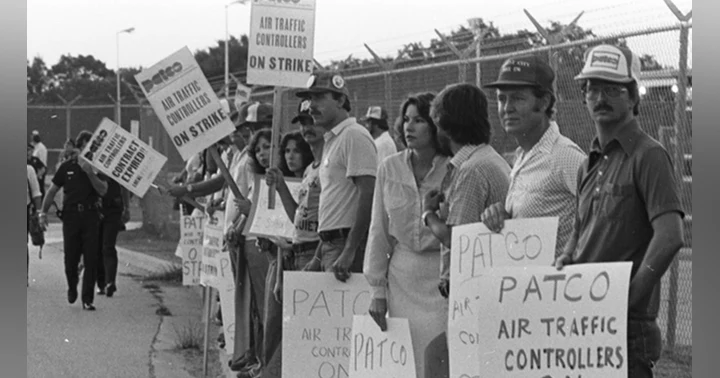
ATC: 45 Years After the PATCO Strike