UND Plants Seed of No-Pilot Airliners
Much has been made lately of the University of North Dakota’s new bachelor’s of science degree in aeronautics with a major in Unmanned Aircraft Systems Operations, taught at the Odegard School of Aerospace Sciences in Grand Forks.

UND is quick to point out that, right now, the military is the primary career opportunity for UAV pilots (see UAV Pilot Shortage & Military Intelligence), but let’s be honest, the no-pilot airliner is just around the corner.
The US Navy has been using the Category III Automatic Carrier Landing System for years. It’s so reliable Uncle Sam’s Yacht Club has reduced the number of cross deck pendants, from four to three, on its new nuclear bird farms, so the technology exists for demanding flight environments. It’s only a matter of time.
 The full implementation of the satellite-based NextGen National Airspace System is a needed component for no-pilot operations, because it completes the “video game” picture of modern aviation. There may well be one more step, however, an interim one-pilot crew, to make traditionalists feel better while the technology proves itself.
Remember that cartoon of the gray-haired senior pilot, sitting in his rocking chair, dog at his side, smoking his pipe and reading the paper? He sits, reads, and rocks where the flight engineer used to ride side-saddle, behind a pane of glass with this placard: Break in case of emergency. That’s the one-pilot cockpit, and it will have much in common with TSA airport inspections, it looks effective.
History has been pointing the way to no-pilot airliners ever since human radio operators, navigators, and flight engineers stopped reporting for duty. Those hoping to delay the inevitable will scream and wail and moan about safety and the consequences of not having Capt. Sully in the cockpit. Yeah, that would be true if Capt. Sully was the rule, not the exception. Accident statistics prove that human factors — stupid pilot tricks — are the cause of most aviation accidents, refuting this argument.
In a Minnesota Public Radio story, Mike Nelson, the former fighter pilot who teaches the UND UAV course said, “The last fighter pilot’s already been born. The last fighter is being built.” I’d hazard a guess that the same is true for airline pilots. (And can corporate pilots be far behind?)
Only time will tell if this is a good thing, or a bad thing. But it is going to happen because pilots will not make the decision; as it’s been for for at least three decades, the future is shaped by corporate czars and bottom-line bean counters looking to make a buck by developing and selling the new technology, or to save one by putting it to work. — Scott Spangler
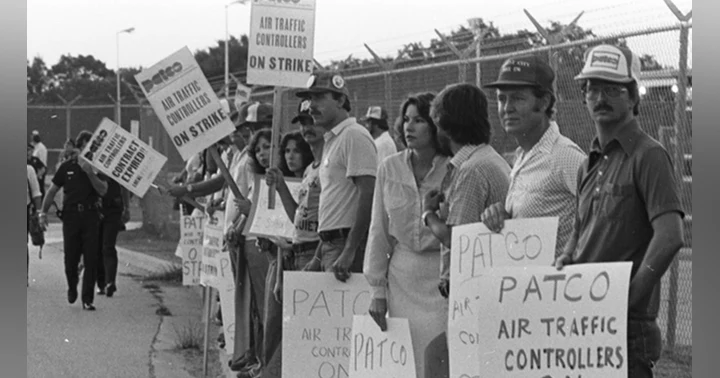
ATC: 45 Years After the PATCO Strike