Joe Sharkey: Quite a Different Perspective on the Brazilian Midair
Being a passenger on board an airplane that barely escapes becoming a pile of twisted metal and flesh would probably be enough to drive most men’s passions for air safety, at least that’s what I’d say about Joe Sharkey.
Sharkey, the writer who happened to be sitting in cabin of the Legacy when it collided with a Boeing 737 over the rainforest last fall, has thankfully continued to pummel the Brazilian government over the insane conduct of the crash investigation.
He told everyone on his blog a few months back that he was frustrated enough with the proceedings in Brazil, that it was time he moved on to write about something new. But I knew he’d be back.
This week he provided a couple of important resources to helping we armchair investigators try and figure out what happened.
A Jetwhine reader told me yesterday that I had my facts wrong in a piece I wrote about the collision and the most likely cause of the crash was that the Legacy crew never turned on their transponder before takeoff rendering the TCAS system inoperative.
That comment simply doesn’t jive with what I read in the report the Legacy’s operator, ExcelAir put together to refute some of the charges tossed on them and their pilots by the Brazilian government.
But perhaps I missed something so please take a look and decide for yourself.
Transponder Technical Info
Clearly the transponder was working for a portion of the trip out of Sao Paulo. There is recorded ground radar info with the data blocks that indicates information was being received from N600XL before the collision.
As for the cockpit comment about the “TCAS being off,” I find that as a pilot, the explanation makes sense, even if retrospectively it might not to someone who is not familiar with a cockpit.
The pilots made the comment referencing the fact that there was no “TCAS inop” light illuminated on the EFIS display. That would mean TCAS was working at the time of takeoff.
Was “the TCAS [light] off?” The answer was yes.
Obviously, the system wasn’t working at the time of the collision, at least not in the Legacy.
But was it in the Boeing? An issue I still find quite odd to this day is that no one has read a transcript of what was going on in the Boeing prior to the midair. And no one seems to be asking where that information is right now.
While I’m certainly not unsympathetic to the Boeing’s victims or their families, if the Brazilian government is so darned certain the U.S. pilots are the only reason the collision, show us the transcript. I can only conclude that it must somehow serve the purpose of the government to keep the data from the public, both Americans and Brazilians.
In the meantime, take a look at the story Joe got hold of from the International Federation of Air Traffic Controllers (IFATCA) November issue of “Controller” magazine that tells the story of the accident, and a well-written brief from the Montreal-based group. I had a bit of trouble linking to Joe’s blog, so head over there and scroll down until you see the magazine cover to read the entire magazine piece.
What makes this transponder debate so incredibly important is that, as the IFATCA report mentions, there is apparently a way the pilots might have disabled the transponder during the flight and been completely unaware of their action.
But the brief also pointed out that no pilot in his or her right mind would intentionally disable this equipment, anymore than they would do “loopty, loops,” with a newspaper reporter, a man brand new to business aviation, sitting in the back seat.
Technorati tags: Brazil+air+traffic+control, IFATCA, Embraer+Legacy, Boeing, Joe+Sharkey, midair+collision
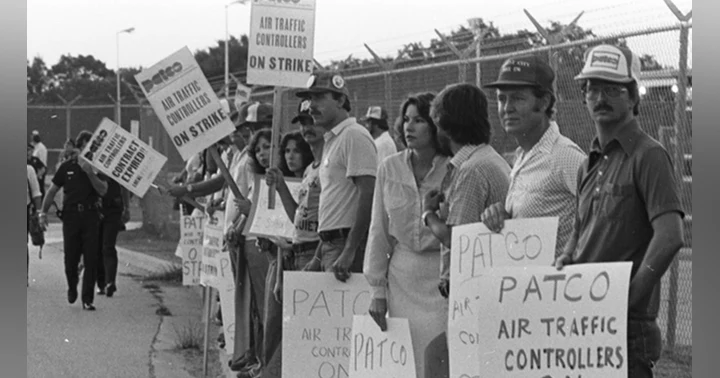
ATC: 45 Years After the PATCO Strike